Scuba diving for beginners is definitely exciting, but it can also feel like jumping into the complete unknown. What does breathing underwater actually feel like? Is scuba diving safe? Will your ears hurt? Is it normal to feel nervous before diving?
If you’re looking for honest advice about your first time scuba diving, here are 10 things nobody tells you about what scuba diving is like.
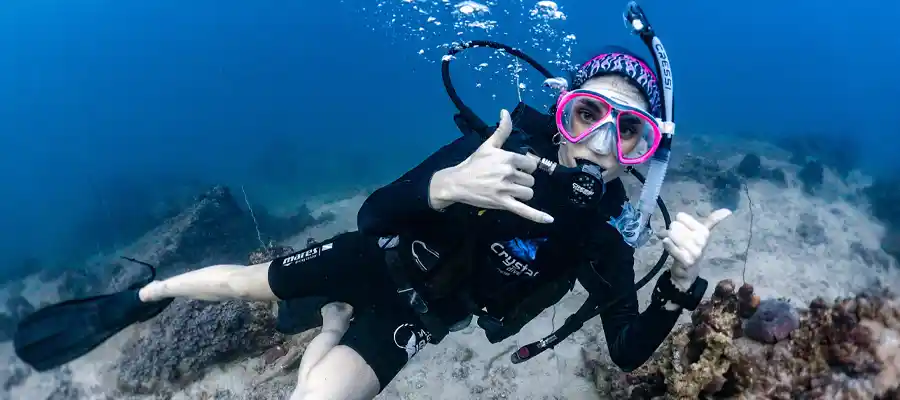
1. Breathing underwater feels unnatural (at first)
Let’s face it, we’re all humans, and we are designed to breathe air from above the surface of the water. We may put our faces under the water in a pool, or duck dive down to see a strange-looking fish, but we can always get right back to the surface for the air we need.
Scuba diving doesn’t work like that. When you are diving, you can’t simply swim back up to the surface from depth, which usually has people asking, ‘Is scuba diving safe?’
The answer is fairly simple. Yes, scuba diving is completely safe when you follow the standards and techniques taught in scuba diving for beginners courses, like our Open Water Course.
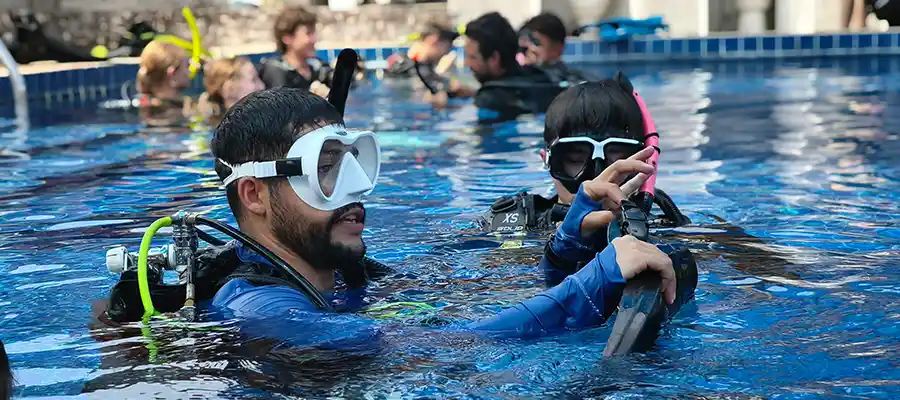
2. Your first time scuba diving, you will likely feel nervous (even if you’re confident)
It can be hard to describe what scuba diving is like, but it’s easy to describe what it’s not like. It’s not like breathing air while standing on land. Even with all the gear strapped to you and a life-giving regulator in your mouth, your brain knows it should not be able to breathe underwater.
Plus, the ocean is an enormous place that is constantly changing and churning. From sea life migrations to currents to rapidly changing temperatures, you never truly know what each dive has in store for you.
Even experienced divers can feel nervous before a dive, but that feeling can be much stronger when it is your first time scuba diving. The trick? Slow everything down.
When you slow down, carefully check your gear, review your dive plan, and take some soothing breaths to keep your heart rate low, you’re signaling to your body that all is well and it should not be afraid.
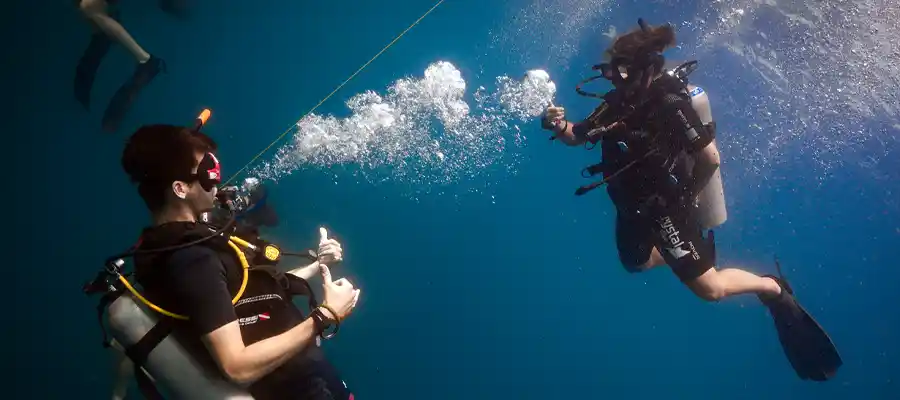
3. Equalising your ears is the biggest early challenge
You’re on Koh Tao, and you’ve decided to take a scuba diving for beginners course. It’s your first time scuba diving, but you’re not worried. You’re crushing the course, and the pool skill sessions are giving you flashbacks of backyard pool parties. You simply can’t wait to experience what scuba diving is like.
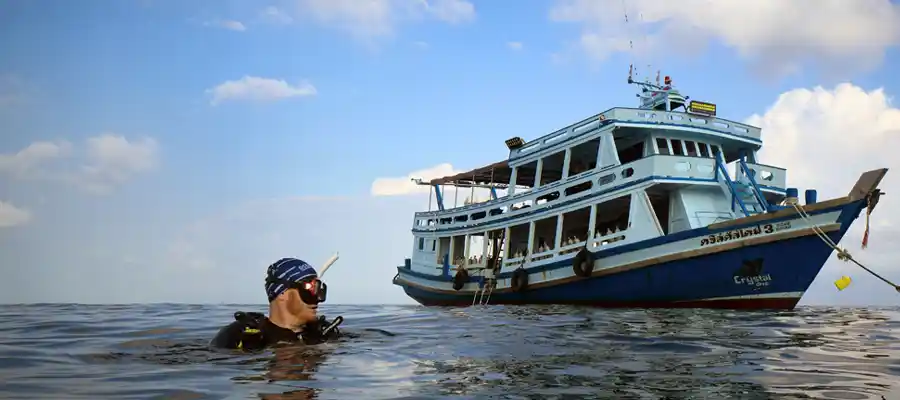
You jump off the boat and start to descend with your group, excited that you’ll actually be able to go check out the corals you can see below you.
Suddenly, you feel a pain in your ear. Maybe a bit subtle at first, but within a breath, the pain is stabbing into your ear.
Don’t worry, you’re just having a bit of trouble equalizing.
Our ears have open spaces within them that hold air. When we’re on land, that air is under the same pressure as the air around us. But when we go scuba diving, the air in our ears compresses, and the outside water pressure starts to push on our eardrums. This is what causes the pain.
To fix it, scuba divers do something called ‘equalizing’. It’s as simple as it sounds. They use one of several techniques to force more air into their ear spaces to equalize the inner pressure with the outer pressure. Once the pressure on both sides of the eardrum is equal, the pain disappears.
Equalizing isn’t just a problem for first-time scuba divers. If you’re sick and the internal spaces in your head become clogged, this can also make it hard for you to equalize as you descend onto a dive site.
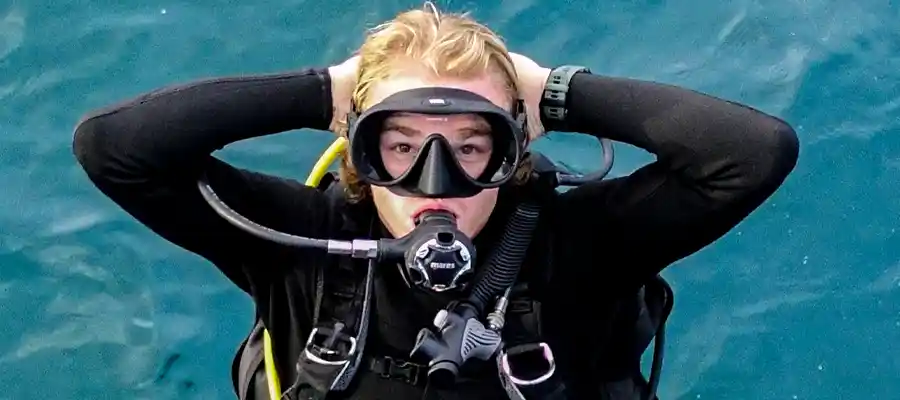
4. The ocean isn’t nearly as quiet as you expect
So, what is scuba diving like when you leave the surface world behind? Scuba diving can be very meditative, but it isn’t because the ocean is a silent place. Far from it. When you go out for your first time scuba diving, you will not believe how noisy the underwater world can be.
The first thing you’ll notice during your scuba diving for beginners course is your own breathing. Breathing underwater is loud. You can hear yourself breath in, and when you exhale, bubbles rush past your ears as they float to the surface.
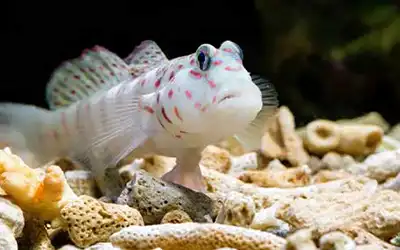
Fish may glide through the water silently, but they are not quiet creatures. Scientists have identified over 1,000 different species of fish that produce sounds as part of their normal behaviour. You may hear fish grinding their teeth together, or parrot fish scraping algae off rocks and corals with their beaks. Other fish vibrate the muscles around their swim bladdders, making it act like a drum.
You may not believe it, but a healthy coral reef also produces crackling sounds. Most of this sound comes from tiny shrimp constantly creating and popping a small bubble of air in their body cavities. When this bubble pops, it can reach 200 decibels, louder than a gunshot!
Plus, since sound travels extremely well in water, sounds in the ocean can actually be louder than you may expect.
5. Air runs out faster than you think (at first)
Here we are, back on the topic of breathable air. Since scuba divers cannot just go back to the surface to breathe, they need to bring all the air they will need with them. But breathing air on the surface versus breathing air underwater are two very different things.
Sure, the mechanism is the same. Your lungs expand and contract to intake and expel the air your body needs to survive. What’s different about breathing air while scuba diving is the pressure. Boyle’s Law explains that underwater pressure increases by a standard amount with every 10 meters of water. The simple explanation is that full lungs of air at the surface will need more air to fill them as you go deeper, because the volume of that air has decreased.
What does this mean for scuba diving for beginners and people experiencing their first time scuba diving?
It means that the air you bring underwater with you does not last as long as you think. And the deeper you descend, the faster you breath through your tank of air. For new scuba divers, this is often a point of frustration because they tend to run through their air quite quickly. However, like anything, mastery comes with practice. The more you dive, the better you become at controlling your breathing and stretching how long you can dive.
One of the main ways to keep scuba diving safe is to always be checking on your air levels throughout the dive. Not once or twice, but every few minutes. Breathing is not a always a constant, steady action when diving. As water conditions change, we may start to breath harder, using more of our precious air. Which is exactly why a diver should constantly be checking the level of air in their tank.
Not only will you breathe more air as you descend deeper, the way divers plan their dives also affects how much air you have to breathe. The standard rule is that a diver should use one third of their tank for the first half of the dive, another third for the return to the designated exit point, and keep the final third in reserve for emergencies.
So while you may think you are jumping in with lots of breathing gas, there are factors working against you that will limit how long you can breath underwater.
6. Scuba diving for beginners is more mental than physical
Scuba diving is a physically demanding sport, even if the goal isn’t to move around alot in the water. Your body’s metabolism works hard on a dive to maintain your body temperature and other critical functions, which means you burn a fairly high number of calories.
But this isn’t usually the hardest part of scuba diving for beginners. The hardest part is learning to trust your equipment, stay calm, and adapt to breathing and moving in an environment that evolution didn’t have in mind for us. A very important lesson to learn is that your first time scuba diving becomes much easier when you learn how to relax underwater.
If you find yourself wondering what scuba diving is like, expect a mental challenge more than a physical one. Staying relaxed and mentally calm is one of the best ways to keep scuba diving safe.
7. Ocean conditions can change what scuba diving is like
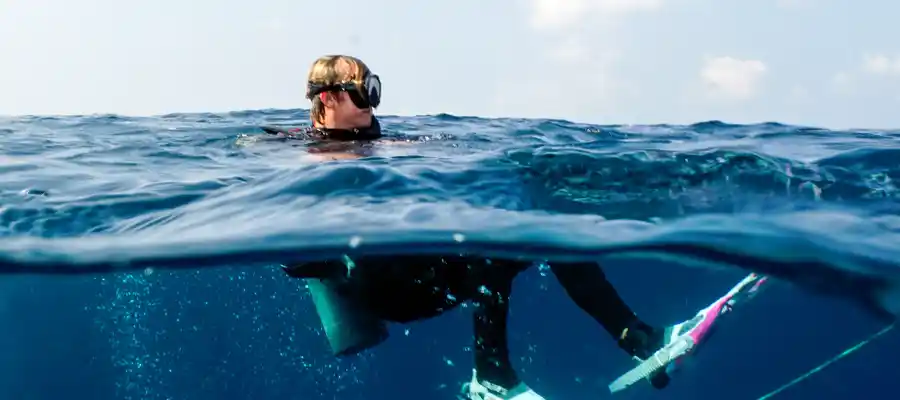
When the weather is changing on land, we can usually see it coming. Underwater weather (visibility, temperature, and current), however, can sometimes change with absolutely no warning. It’s no secret. The ocean is a challenging place.
Again, you might find yourself then asking, ‘Is scuba diving safe?’
The answer is still yes.
Sure, the conditions underwater might change quickly, and change what scuba diving is like. It might even force you to make decisions or take actions immediately for your safety and the safety of your dive buddies. But that is what scuba diving for beginners starts to teach you. It teaches you to understand the fundamentals of scuba diving so that you can start to make informed decisions in moments that require action.
Will you learn everything you need to know on the Open Water Course? Certainly not. There are almost countless courses you can take once your first time scuba diving gets you hooked on the sport.
8. You will rely heavily on hand signals and trust
It’s easy to see the things you need for a successful dive. The right gear that has been properly maintained, good weather conditions, the appropriate training, and a buddy who’s as jazzed to dive as you are.
But trust is just as big a component when you’re scuba diving.
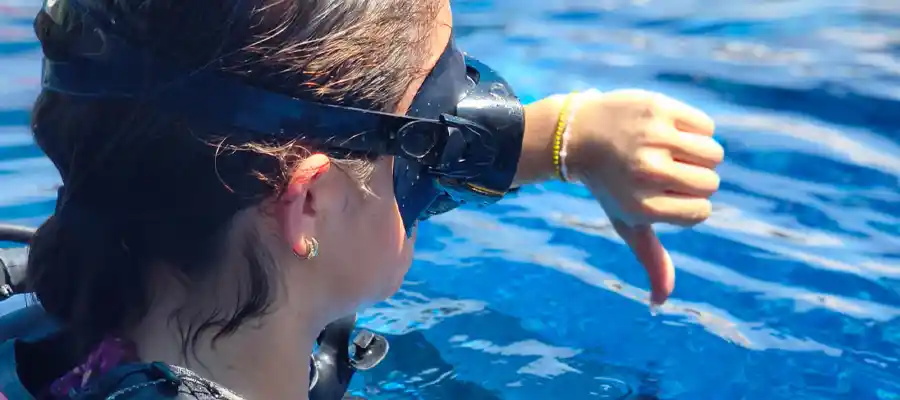
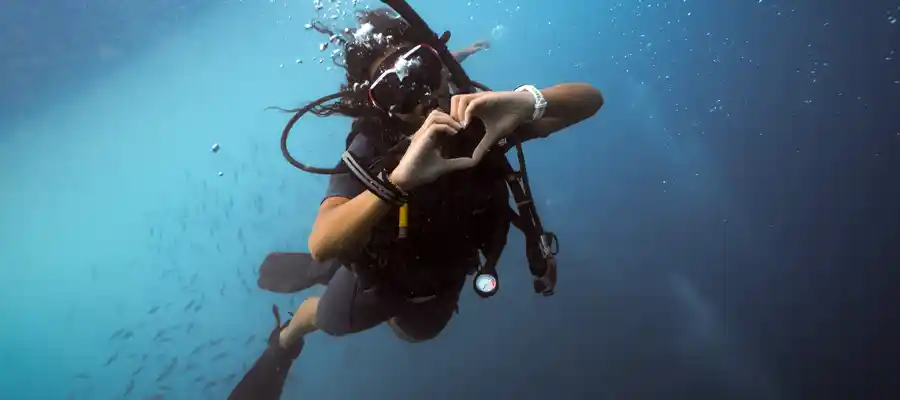
Once you jump off the boat and start to descend, how do you communicate with your dive buddy? How can you tell them what scuba diving is like for you in that moment? What about them telling you that they’re having a problem?
Courses that teach scuba diving for beginners will show you the specific (and sometimes very strange) hand signals that divers use underwater to communicate. Your first time scuba diving, you’ll even get to practice them as your instructor will communicate questions to you, and you will need to answer.
The other aspect of trust in scuba diving is with our gear. Scuba gear is life-support equipment. There’s no way around that fact. You cannot make scuba diving safe if you do not keep your gear in top working condition. If you have your own gear, always make sure you have it serviced regularly. Should you be renting gear on your dive stops around the world, ask when the gear was last serviced, make sure you take a good look at it, and point out any wear and tear.
9. Buoyancy control is harder than it looks
We’ve all seen movies of people underwater looking like merpeople, gracefully moving around like the water is there to help them and not hold them back.
This is not what your first time scuba diving will look like, trust us.
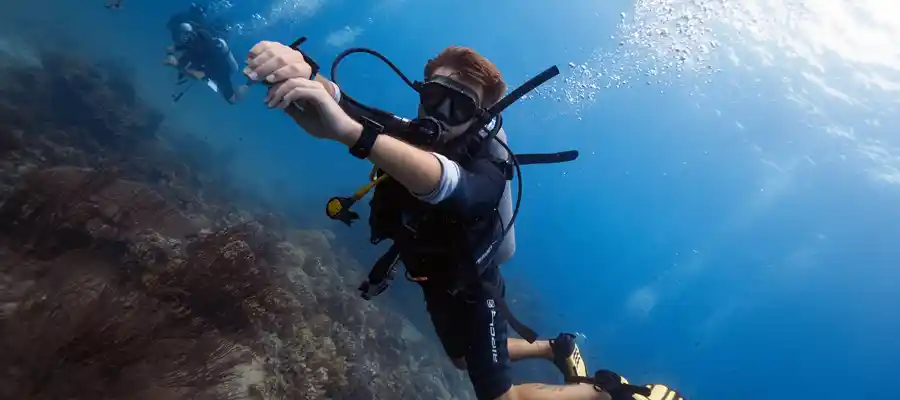
Scuba diving for beginners focuses a lot on buoyancy control, or how you control your body in the water. It may sound like a small topic, even a simple one perhaps, but it sure isn’t.
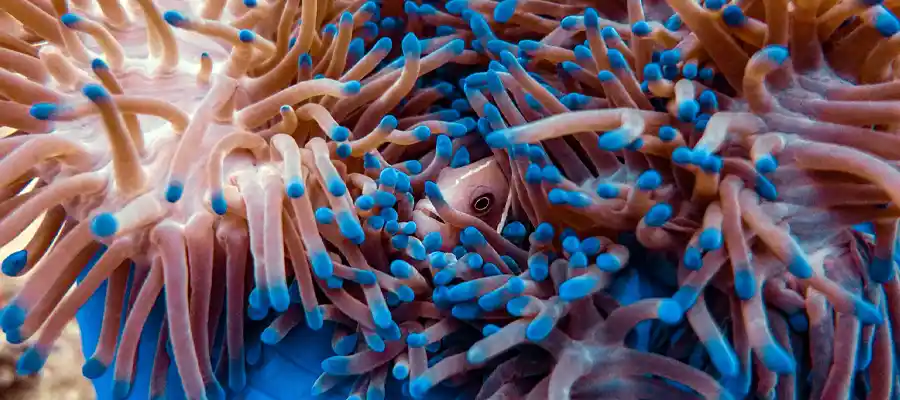
Buoyancy control is important to make sure that you can control exactly where you are, when you need to be there, like waiting on a safety stop. Having good control is also the most important way we can protect coral reefs as scuba divers, allowing us to get close and stare in wonder at strange creatures, but without touching them or anything around them.
Are you a beginner scuba diver who thinks they’ve mastered their buoyancy control? Sign up for our Advanced Open Water course. We’ll teach you how to back fin and give you a real taste of how excellent buoyancy control is a diver's best friend.
10. You don’t need to be ultra fit (being calm matters more)
Is scuba diving considered an extreme sport? Yes, it is.
Should you be relatively healthy for your first time scuba diving? Yes, you should.
Do you need to be a marathon runner to sign up for a scuba diving for beginners course? No, you do not.
The honest truth is that the human body is put under a lot of stress when scuba diving, but the good news is that it can handle it. Being in good general health is one of the ways that helps keep scuba diving safe for divers of all ages.
What matters equally is your mental state. A good diver is able to stay calm underwater if something goes wrong and think of a solution with a clear head. While you won’t develop this instinct during your first time scuba diving, practicing meditation and calming exercises before a dive can really help to keep scuba diving safe.
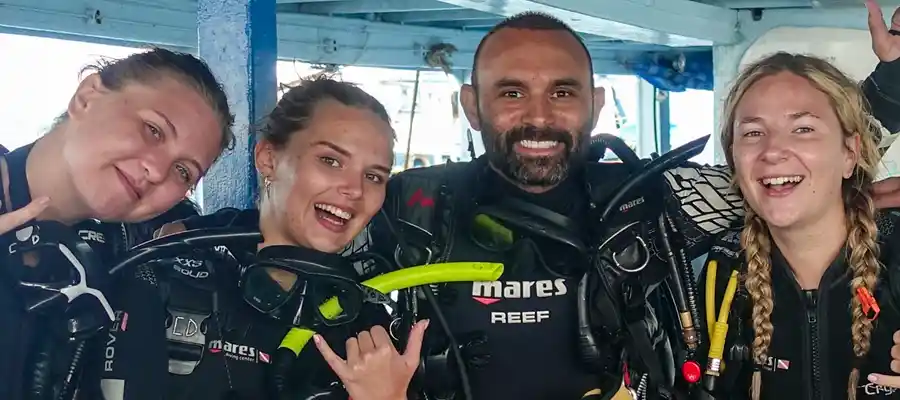
Scuba diving for beginners can be full of surprises, but that’s part of what makes it such an unforgettable experience. It’s natural to feel a little nervous for your first time scuba diving, but proper training, modern equipment, and experienced Crystal Dive SSI Instructors will help you build the confidence you need to be an excellent diver.
Before long, the things that once seemed intimidating, like breathing underwater or equalizing your ears, will become second nature. As your confidence grows, you’ll experience what scuba diving is like beyond the training. A peaceful feeling of weightlessness and freedom in a completely foreign world.
Is a Beginner Scuba Diving Course Difficult?
This is probably the most common question we get from people interested in learning how to start scuba diving, but our answer is always the same. No, beginner scuba courses are not difficult, and, in fact, beginner scuba diving lessons are specifically designed for people who have never had any experience with scuba diving at all.
- You do not need any previous scuba diving experience.
- You do not need to own any of your own diving gear. We provide everything you need.
- You do not need to be an elite swimmer. But you will need to be comfortable in the water and be able to meet the basic swim requirements of whichever course you choose.
Your first scuba diving course could be challenging in places because you are learning a new skill, but our expert SSI instructors will demonstrate each skill before you try it, and they will keep practicing with you until you are fully comfortable.
Ready to Learn How to Start Scuba Diving?
They say that every fabulous journey starts with a single step. But we say it starts with a single fin kick.
How to start scuba diving is not as hard as you may think, and it may actually fit into your travel schedule. Sure, you can come to Koh Tao to experience our unique island vibe and energetic jungle parties, but in between, you can also make sure that you leave with something more valuable: a scuba certification.
The underwater world is waiting. Explore our beginner scuba courses or chat with our team to find the scuba diving lessons that are the perfect match for you.