Choose a Dive Centre for Your Perfect Koh Tao Experience
Koh Tao, a tiny island in the Gulf of Thailand, is famous for its warm, clear water, beautiful coral reefs, and relaxed island vibes. It’s also one of the world’s top places to learn to scuba dive, with courses for everyone from complete beginners to future dive professionals.
But with over 70 dive shops on the island, how do you choose a dive centre without feeling overwhelmed? How do you know which school will give you the best, safest, and most enjoyable experience? Whether you’re learning to dive for the first time or thinking about professional training, knowing the things to look for in dive shops on Koh Tao can make all the difference.
Also, not all dive shops provide the same level of safe dive training on Koh Tao, so taking time to compare safety practices and instructor experience is definitely worth it.
This guide will help you understand exactly what to consider when deciding where to learn to scuba dive, and why Crystal Dive is one of the best dive shops on Koh Tao.
1. Choose a Dive Centre With a Location and Lifestyle That Fits You
Location and atmosphere are both important things to look for in dive shops because when you’re choosing where to learn to scuba dive on Koh Tao, location can affect your overall experience on the island. It doesn’t change where you dive since all centres visit the same dive sites, but it does shape the lifestyle you’ll have between dives.
- Sairee Beach is Koh Tao’s social hub, filled with restaurants, beach bars, and nightlife. If you like a busy, energetic atmosphere and want to meet lots of other travellers, this area might be for you.
- Mae Haad, where Crystal Dive is located, offers a balanced mix of convenience and calm. You’re close to the pier, shops, and restaurants, but it’s quieter and more peaceful than Sairee.
- Chalok Baan Kao, at the island’s southern end, is the most tranquil area. It’s ideal for travellers who prefer a slower pace and a quiet place to relax after a day in the water.
2. On-Site Training Facilities: Important Things to Look For in Dive Shops
One of the most important things to look for in dive shops is whether it has their own training pool. An on-site pool allows you to learn basic scuba skills in a safe, controlled environment before entering open water. It’s one of the key elements of safe dive training on Koh Tao, letting beginners master skills in a safe environment before entering the open ocean.
Some dive schools on Koh Tao share pools with others or rent time slots, which can lead to crowded schedules or limited practice. Crystal Dive has a private, purpose-built training pool with multiple depths to suit different learning stages. That means you can practice skills comfortably and confidently without waiting or sharing the space.
A dedicated training pool should always be one of the things to look for in dive shops that you’re thinking about visiting.
3. Check Boat Access and Course Scheduling
Boat access and scheduling are often forgotten about when thinking of things to look for in dive shops. Reliable, well-managed boats are a must when choosing where to learn to scuba dive. Some dive shops share or rent boats, which can mean larger groups and less flexibility in scheduling.
Crystal Dive operates its own dive boats, designed specifically for training and fun diving. With spacious decks, dedicated crews, and easy access from the private beachside pier, the logistics are simple and efficient. Running our own boats means our team can adjust schedules based on weather, experience levels, and dive site conditions, making sure that every dive is safe, smooth, and enjoyable.
It also plays a major role in maintaining our safe dive training standards, from smooth entries to well-timed dives.
4. Choose a Dive Centre With Complete Learning Facilities
When you’re comparing the things to look for in dive shops so you can choose the best dive shop on Koh Tao, remember that convenience matters. A good dive centre should have everything in one place: classrooms, equipment storage, rinse tanks, areas to relax and eat between dives, and even accommodation.
At Crystal Dive, we have all of this on-site. The air-conditioned classrooms are equipped for any SSI dive training course, there’s plenty of gear storage and rinse space, and the on-site bar and restaurant make it easy to unwind after a day of diving. A dive centre that’s fully equipped for theory, practice, and relaxation creates the right conditions for safe dive training on Koh Tao.
5. Prioritise Safe Dive Training on Koh Tao
One of the top things to look for in dive shops is instructor experience and teaching quality. The best dive centres on Koh Tao ensure that every student feels safe, supported, and confident underwater.
When deciding where to learn to scuba dive, ask the dive centre about instructor qualifications, student-to-instructor ratios, and whether lessons are offered in multiple languages.
At Crystal Dive, all our SSI courses are taught by experienced instructors who have completed thousands of dives. Many were trained through Crystal’s own professional program, which ensures consistency and high standards across the team. Student groups are kept small to maintain the highest standards for safe dive training on Koh Tao.
6. Understand the Dive Centre’s Training Agency
When deciding how to choose a dive centre, agency affiliation is one of the key things to look for in dive shops. The most common dive shops on Koh Tao are SSI (Scuba Schools International) and PADI (Professional Association of Diving Instructors).
Crystal Dive proudly teaches under SSI, one of the most respected names in scuba diving education. SSI’s digital learning system lets you start studying online before you arrive, using interactive materials that are available on any device. The system allows flexible, performance-based learning that lets you move on only when you’re ready. This flexible approach to skill mastery supports safe dive training on Koh Tao because you’ll never find yourself doing something that you find uncomfortable.
All SSI certifications are globally recognised, so whether you dive again in Thailand or anywhere else in the world, your qualification will be accepted.
7. Choose a Dive Shop That Cares About the Ocean
Environmental responsibility is one of the most forgotten things to look for in dive shops. If you’re searching for the best dive shop on Koh Tao, look for one that actively contributes to marine conservation. Diving responsibly helps protect the reefs and marine life that make Koh Tao so special.
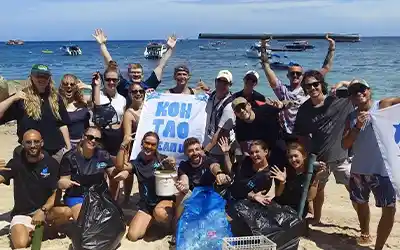
Crystal Dive is home to The Coral Tribe, a dedicated marine conservation initiative focused on coral restoration, reef cleanups, and data collection. Students can join eco-projects or enrol in SSI Ecology Courses like Coral Identification and Marine Ecology to deepen their understanding of ocean ecosystems.
Choosing a school that values sustainability ensures your dives are helping the ocean, not harming it. Also, shops that teach eco-awareness also tend to excel at safe dive training since they’re entire vibe is built around respect for the ocean.
8. Read Reviews Before You Choose a Dive Centre
One of the easiest things to look for in dive shops is reputation. Check recent reviews to see what students and certified divers are saying. Look for comments about equipment quality and instructor experience, as these directly reflect whether they can offer safe dive training on Koh Tao.
Crystal Dive consistently earns five-star reviews across major travel and diving platforms, with students praising the professionalism of instructors, high safety standards, and friendly atmosphere. Many divers return year after year, and some progress from beginner to professional diver entirely at Crystal Dive.
9. Check for Accommodation and Package Options
When comparing where to learn to scuba dive on Koh Tao, accommodation can make a big difference. Many dive schools offer course-and-stay packages, which save money and make logistics easier.
Crystal Dive provides flexible packages for all budgets, from on-site rooms to partner resorts nearby. Whether you prefer a social stay right at the dive centre or a quiet bungalow along the beach, there’s something to suit your travel style. Choosing a dive centre with on-site lodging means less stress, a key to safe dive training on Koh Tao.
10. Think Ahead: Can You Continue Your Dive Education?
Long-term learning opportunities are another of the important things to look for in dive shops. Even if you’re only planning your first course now, it’s worth choosing a dive shop that offers room to grow. If you decide to continue your education or go professional, it’s easier when you’re already part of a trusted dive centre.
Crystal Dive is one of the most established professional training centres in Southeast Asia. Our full range of safe dive training, from beginner courses to instructor training, is available year-round. With experienced mentors, hands-on training, and a reputation for producing confident dive professionals, Crystal Dive is the best dive shop on Koh Tao to start or grow your scuba career.
Why Crystal Dive Should Be Where You Learn to Scuba Dive
Choosing the right dive school means understanding the things to look for in dive shops. The best dive shop on Koh Tao will combine experience, safety, modern facilities, and genuine care for the ocean, all of which you’ll find at Crystal Dive.
Crystal Dive offers:
- A convenient yet peaceful location in Mae Haad
- A purpose-built on-site training pool
- Private boats with flexible dive schedules
- Air-conditioned classrooms and modern facilities
- Small class sizes and multilingual instructors
- A strong commitment to marine conservation
If you’re researching where to learn to scuba dive or wondering how to choose a dive centre, Crystal Dive is ready to help you take your first steps beneath the surface safely, confidently, and with a smile. Our combination of structure, experience, and attention to detail makes us one of the best dive shops on Koh Tao for safe dive training.
When comparing things to look for in dive shops across Koh Tao, Crystal Dive checks every box. Contact us today to book your first (or next) dive course!