If you spend enough time diving around Koh Tao, you start to notice two things very quickly.
First, the reefs here are resilient, colourful, and full of life that continues to surprise us. This small island has become an important place for ocean conservation in Thailand, with divers, instructors, and local organisations working hard to protect the marine ecosystem.
Second, there is far more trash underwater than there should be.
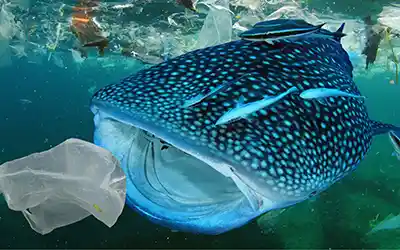
Ocean plastic pollution is a growing problem across the world, and Koh Tao is no exception. While many people see the results during beach clean-ups on Koh Tao, far fewer realise how much debris sinks below the surface and settles on the reef.
That is where Emma comes in.
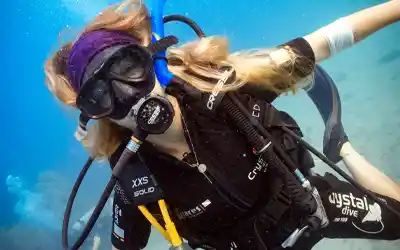
She is a familiar face at Crystal Dive, a dedicated participant in trash diving on Koh Tao, and someone who has turned frustration about ocean plastic pollution into meaningful action, dive after dive, kilo after kilo.
When we talk about cleaning the ocean, we are not talking about picking up the occasional plastic bottle.
We are talking about serious, relentless, eye-opening cleanup work happening beneath the surface, where committed divers are playing a real role in ocean conservation in Thailand.
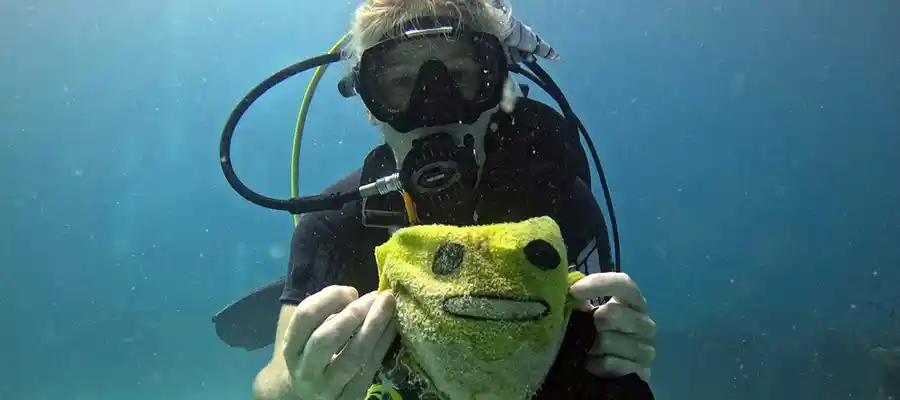
Trash Diving on Koh Tao: From Junkyard to Dive Site
One of Emma’s main focus areas has been Mae Haad Reef, a site many people now use for swimming, training, and relaxed dives. It is also one of the areas where local divers are actively supporting ocean conservation in Thailand through regular underwater cleanups.
Locally nicknamed “Turtle Poop Bay”, this area has been slowly transformed through persistence, patience, and an impressive tolerance for poor visibility and extremely territorial damselfish. What started as a frustrating dive site has become a clear example of how trash diving on Koh Tao can make a real difference.
And the numbers tell the story.
Emma’s Trash Dive Impact (as of 06/01/2026)
- Trash dives completed: 44 (since August 2025)
- Total trash collected: 937.3 kg
- Goal: 1000 kg
- Remaining: just 62.66 kg
- Primary site: Mae Haad Reef
That is nearly one metric tonne of waste removed from Koh Tao’s underwater environment by a single diver who refused to ignore the problem. Efforts like this support wider ocean conservation in Thailand, while also highlighting the scale of ocean plastic pollution that can accumulate below the surface.
Many visitors see volunteers collecting rubbish during beach clean-ups on Koh Tao, but a large portion of the waste sinks and settles directly on the reef. That is why underwater efforts like Emma’s work are such an important part of protecting local marine life.
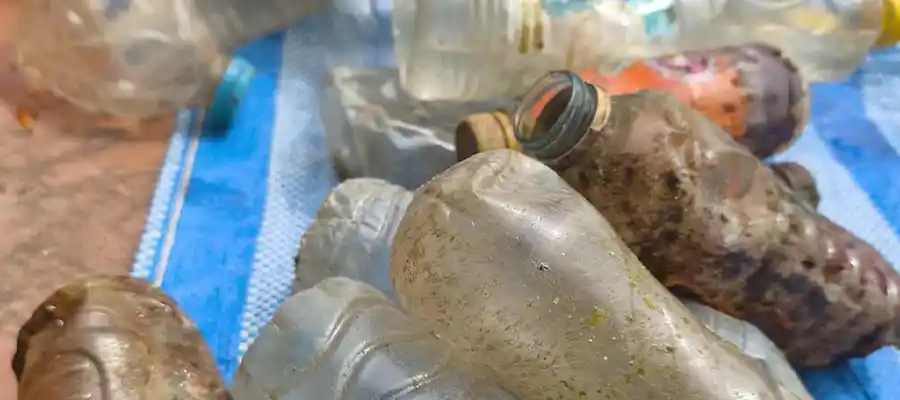
Ocean Plastic Pollution Finds: Our Top List of Trash Finds
Some of the trash is sadly predictable.
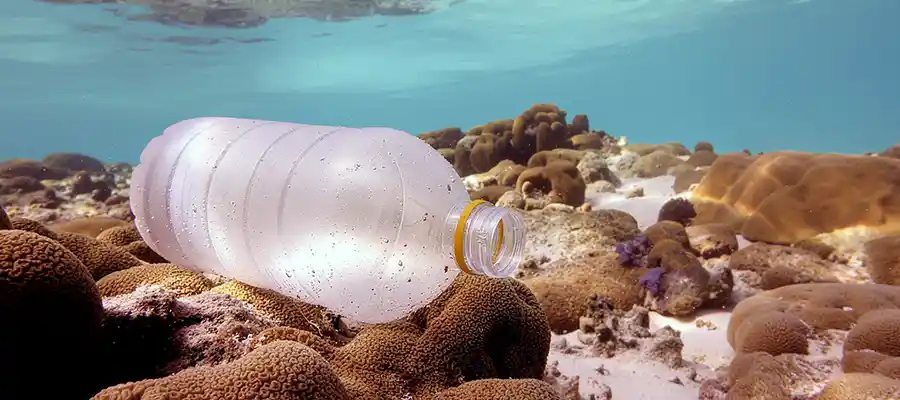
Plastic bottles.
Food and drink cans.
Fishing nets, lines, hooks, and rope.
Plastic bags, sacks, fragments.
Cutlery, cups, crockery.
Food wrappers (hundreds and hundreds of them).
But some items have been a bit more memorable.
Fire extinguishers.
Smoke alarms.
Rice cookers and gas cookers.
Electric fans.
Socket sets, drills, and drill bits.
Fishing weights and spark plugs.
Two small engines.
A solar panel.
Speakers and a cassette tape.
A scooter tyre and a gas cylinder.
Large biscuit tins.
A pillow.
A calculator.
Plus batteries (boat batteries and AA batteries), fan belts, scuba weights, inner tubes, light bulbs, and paint tins.
Then there’s the clothing.
T-shirts. Towels. Bedding. And for reasons no one can explain, a truly baffling number of men’s trousers.
If it exists on land, chances are Emma has found it underwater.
The longer Emma spends trash diving on Koh Tao, the stranger the discoveries become.
When the Ocean Gives Something Back
Now and then, while working on ocean conservation in Thailand, the sea offers a moment that hits a little differently.
While trash diving on Koh Tao, Emma recovered a wallet. At first, it seemed like just another lost item, until it turned out to belong to one of our own Crystal Dive students. The student had dropped it on the beach just two days earlier.
Somehow, it had already made its way underwater.
Cards, cash, and ID were all sitting quietly on the seabed. Another small example of how easily items from land become part of the ocean plastic pollution problem.
It was returned, slightly saltier, but intact. Moments like this are a powerful reminder that what we lose on land rarely stays there. Items dropped on the beach or left behind after busy days by the sea often end up in the water, which is why initiatives like beach clean-ups on Koh Tao and underwater clean-ups are so important.
Trash Diving on Koh Tao Isn’t Glamorous (But It Matters)
Trash dives aren’t pretty.
Visibility is often poor.
The bottom is silty.
Lifting heavy objects is physically demanding.
And you’re constantly negotiating with aggressively protective damselfish who take their nesting duties very seriously.
That is the reality of trash diving on Koh Tao, and it is one of the less visible sides of ocean conservation in Thailand. While many people see volunteers during beach clean-ups on Koh Tao, much of the debris that enters the ocean sinks and settles on the reef, where it needs to be removed by divers.
But every item removed makes a difference.
Every bottle is one less hazard.
Every net lifted is one less entanglement risk.
Every kilo collected helps reduce ocean plastic pollution and gives the reef space to recover.
This work is not just about cleaner dive sites. It is about protecting marine life, improving diver safety, and supporting the long-term health of Koh Tao’s reefs.
Crystal Dive and The Coral Tribe: A Partnership for Ocean Conservation in Thailand
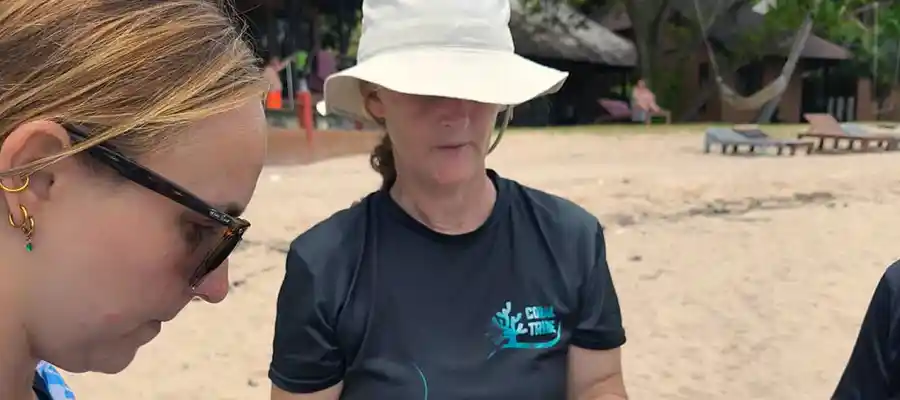
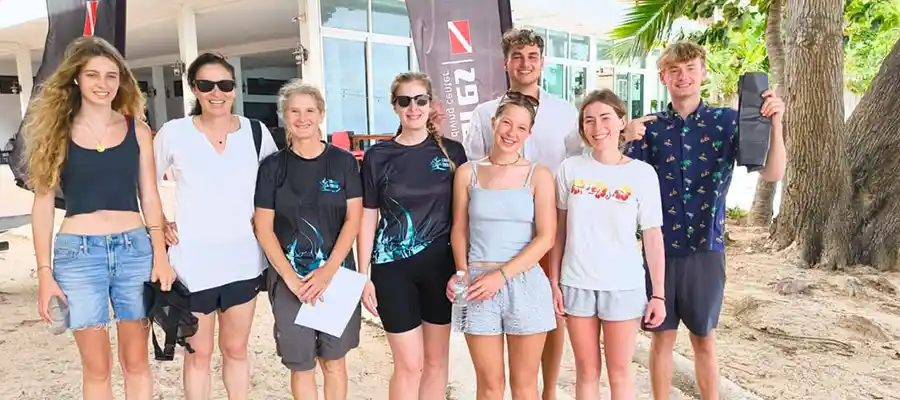
At Crystal Dive, responsible diving is not optional. It is part of who we are and a key part of supporting ocean conservation in Thailand. That is why we work closely with The Coral Tribe, our dedicated eco partner, to support conservation efforts that create real impact underwater.
The Coral Tribe focuses on hands-on marine conservation projects around Koh Tao. Their work includes reef restoration, artificial reef structures, marine education, and community-driven initiatives that help address ocean plastic pollution and other environmental challenges.
Trash diving on Koh Tao is an important part of that effort. You can restore coral all day long, but if the seabed is still covered in debris, recovery is limited. Removing waste from the reef helps create the conditions marine ecosystems need to recover and grow.
Emma’s work fits perfectly with this mission. Cleaning sites like Mae Haad Reef helps create safer, healthier environments for coral growth, marine life, and future conservation projects led by The Coral Tribe.
Together with regular beach clean-ups on Koh Tao and underwater clean-up dives, these efforts are helping build a stronger culture of marine protection around the island.
Through this partnership, divers at Crystal Dive do not just learn how to dive. They become part of a community that understands protecting the ocean is a long-term commitment built on consistent action.
The Hard Truth About Ocean Conservation in Thailand (And the Hopeful One)
The sad reality is simple.
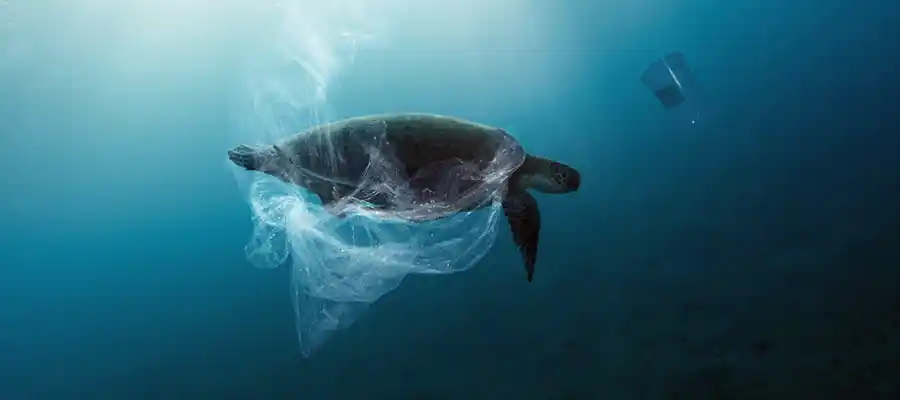
There is far too much trash in the ocean. Far more than should ever be there. Across the world, ocean plastic pollution continues to grow, and even small tropical islands like Koh Tao feel the impact both above and below the surface.
But there is also a hopeful side to the story.
People like Emma exist. Divers continue to show up. Real change happens slowly, stubbornly, and dive by dive. Underwater cleanups and beach clean-ups on Koh Tao are becoming an important part of the local effort supporting ocean conservation in Thailand.
After 44 dives and 937.3 kg of trash removed from the seabed, there is still more work to be done. That is the reality of trash diving on Koh Tao. The ocean has been collecting debris for years, and it takes persistence to begin reversing that damage.
And yet, the difference is already visible.
Sections of the reef once covered in debris are clearing. Marine life has more space to move and feed. Dive sites become safer for both divers and wildlife.
Want to Get Involved? Go Trash Diving on Koh Tao
Feeling inspired to get involved? You can.
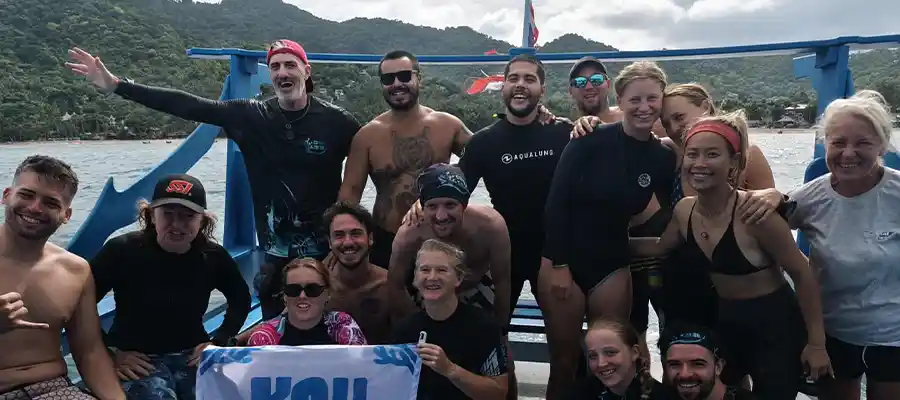
At Crystal Dive, divers regularly take part in conservation-focused dives that directly support ocean conservation in Thailand. In partnership with The Coral Tribe, we organise underwater clean-ups, conservation dives, and eco-focused courses designed to help divers understand and actively address ocean plastic pollution.
These dives include regular trash diving on Koh Tao, where divers work together to safely remove debris from local reefs and seabed areas. Alongside underwater efforts, the community also runs beach clean-ups on Koh Tao, helping prevent waste from entering the ocean in the first place.
Whether you are newly certified or an experienced diver, these activities are a powerful way to give something back to the ocean while building skills, awareness, and experience in marine conservation.
If you are interested in joining, simply ask in the shop or speak with your instructor about upcoming trash dives, eco courses, or conservation projects with The Coral Tribe.
Because protecting the ocean does not require grand gestures.
It starts with people who care enough to show up.
Just like Emma.