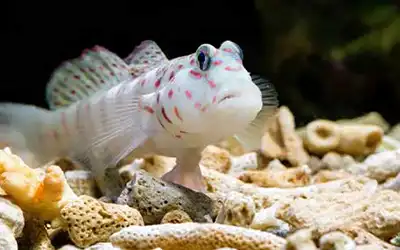
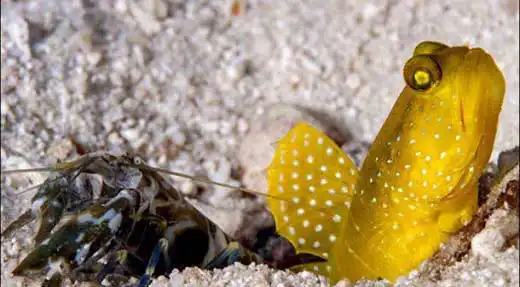
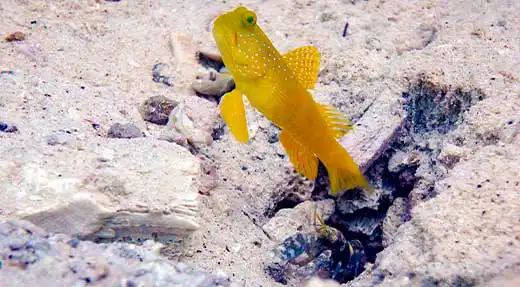
Look closely at the sandy areas of Koh Tao’s dive sites, and you’ll probably spot a goby and shrimp that appear to be working together. This unlikely pair is a fascinating part of Koh Tao’s marine life, with the burrowing shrimp and goby sharing a home and relying on one another for protection.
Their partnership is a remarkable example of cooperation beneath the waves. The shrimp builds and maintains their shared burrow, while the goby acts as a lookout, keeping watch for predators. Together, these partners show just how much cooperation can happen between two very different creatures on the seafloor.
A Remarkable Symbiotic Relationship
The relationship between gobies and shrimp is a really interesting example of a symbiotic relationship, where two different species live closely together and both benefit from the partnership.
The shrimp provides a secure home, while the goby acts as a lookout, using its sharp eyesight to watch for predators. It is a clean division of roles, but one that gives both animals a better c
hance of staying safe and alive.
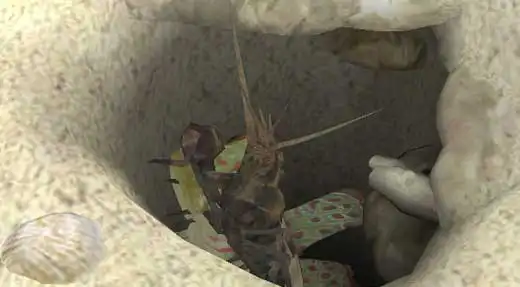
The shrimp is an impressive little engineer. Using its legs and specialised appendages, it continually excavates and maintains a burrow in the sand. It may look like a small opening from above, but it can lead to a surprisingly complex network of tunnels beneath the seafloor. Tunnels that provide shelter for both animals.
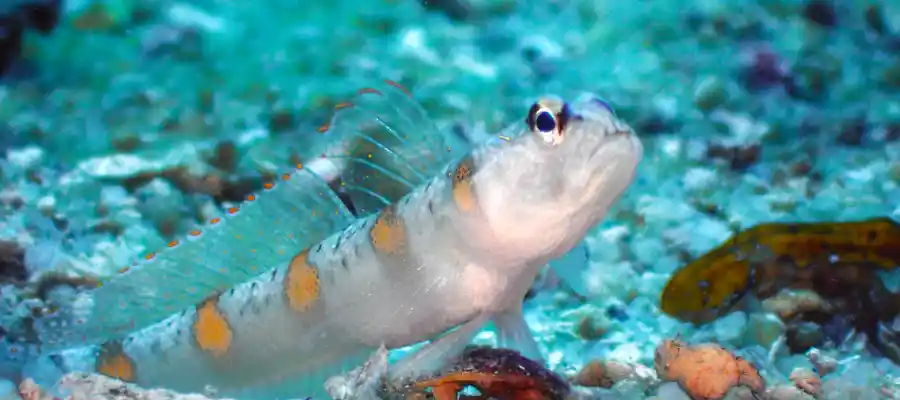
The goby, meanwhile, usually stays close to the entrance, keeping watch over the surrounding area. While the shrimp works below the sand, the goby can spot potential threats and quickly retreat into the burrow when danger approaches.
For the burrowing shrimp and goby, their relationship is an impressive example of how different species can work together to make life a little safer and easier for both.
How Do the Goby and Shrimp Communicate?
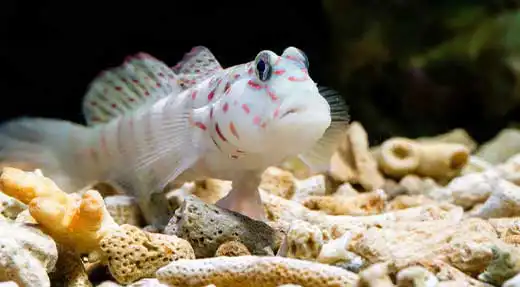
The goby and shrimp have an unusual way of communicating, and it is an essential part of their relationship. The shrimp has relatively poor eyesight, so it relies heavily on physical contact with its goby partner while working around the entrance to the burrow.
One of the shrimp’s long antennae will often remain in contact with the goby at all times. If the goby spots a potential threat, it retreats towards the burrow, signalling to the shrimp that danger is approaching. The shrimp responds by quickly disappearing underground, taking shelter before the predator gets too close to do any damage.
Researchers have noticed that communication between gobies and their shrimp partners is primarily tactile. In other words, the burrowing shrimp and goby communicate through physical contact and movement rather than sound. This constant connection allows the shrimp to respond to a warning from the goby even though its poor eyesight makes it difficult to detect approaching predators itself.
For a diver watching this example of Koh Tao marine life in action, the whole exchange can happen in an instant. One moment the shrimp is busily moving sand; the next, both animals have vanished beneath the seafloor.
Spotting Gobies and Shrimp Around Koh Tao
Some of the most rewarding Koh Tao marine life encounters happen when you slow down and pay more attention to the seafloor. You don't need to find one of the island's biggest or most colourful animals to have a memorable dive.
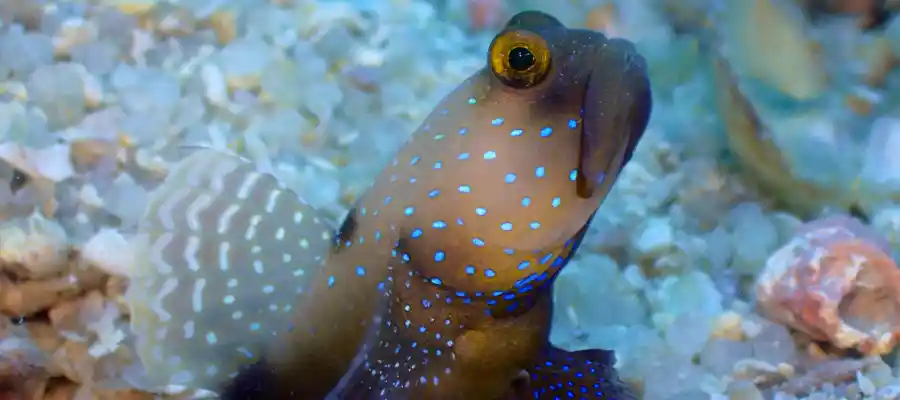
Goby and shrimp pairs are typically found around sandy or rubble areas where the shrimp can excavate a burrow. The goby is usually easier to spot, hovering above the entrance or sitting just outside the burrow, usually almost upright, keeping a keen eye out for danger.
The shrimp can be much harder to see. Look for subtle movement in the sand, a pair of antennae reaching from the burrow, or freshly excavated sediment around the entrance. If you spot a goby hovering in one place, there is a good chance its burrowing partner is nearby.
And don't rush the encounter. A sudden approach or a cloud of bubbles can send both animals retreating underground. Give them some space, settle quietly nearby, and wait. With a little patience, you may soon see the goby emerge, followed by the shrimp getting back to its housework.
For divers who take the time to observe, these tiny partnerships are a perfect reminder that there is always more to discover beneath Koh Tao's surface.
One of Nature’s Perfect Symbiotic Partnerships
The next time you're exploring Koh Tao's dive sites, take a moment to look down at the sand, since some of the most fascinating Koh Tao marine life can be found in places that are easy to overlook.
The goby and shrimp partnership is a remarkable example of a marine symbiotic relationship, with each animal providing something the other needs. The burrowing shrimp and goby work together to create a safer life beneath the seafloor, with the shrimp building and maintaining their home while the goby keeps watch for danger.
So, if you spot a little goby hovering above a sandy burrow, slow down and take a closer look. There may be a hardworking shrimp just beneath it, quietly going about its work while relying on its watchful partner for protection.
Want to understand more about the relationships you encounter beneath the surface? Our Marine Ecology courses at Crystal Dive explore the fascinating connections between marine species and the ecosystems they call home, giving you a deeper understanding of the underwater world you're exploring.